Cute Duck Strawberry Embroidery Review
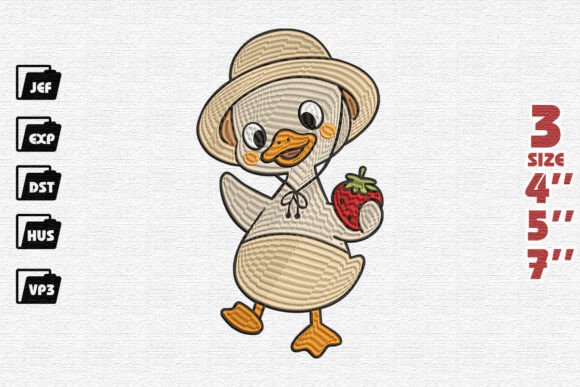
As a designer who has spent years navigating the delicate balance between whimsical charm and commercial viability, I approach every new machine embroidery design with a critical eye. The market is flooded with generic patterns, but finding a machine embroidery design that truly elevates a handmade product requires more than just a cute concept; it demands technical precision and aesthetic cohesion. Today, I am evaluating the Cute Duck Strawberry Embroidery, a design promising to "spread some sunshine" with its cheerful depiction of a duck holding a strawberry. My goal here is not merely to describe the image, but to dissect how this specific file performs when translated from a digital preview into a tangible, stitched reality for your craft business or personal projects.
First Impressions: Mood and Visual Personality
At first glance, the Cute Duck Strawberry Embroidery exudes a playful, summery energy that fits perfectly within the Baby Animals category. The composition features a happy duck character interacting with a vibrant strawberry, creating a focal point that is both simple and engaging. For an Etsy seller or small shop owner looking to refresh their inventory with seasonal items, this design immediately suggests a spring or summer collection. The layout appears balanced, avoiding the common pitfall of overcrowding the hoop while still offering enough detail to hold visual interest. The personality of the design is undeniably friendly, making it an excellent candidate for nursery decor, children's apparel, or lighthearted home goods.
However, the true test of any embroidery file lies in how it translates to fabric. When I visualize this on a finished product, the key will be the execution of the fill stitches versus satin stitches. A design like this relies heavily on smooth gradients and clean edges to maintain its "adorable" quality. If the stitch density is too high, the strawberry might look muddy; if it is too low, the texture of the duck could appear sparse. As a professional, I always recommend testing the design on scrap fabric first to ensure the thread colors pop against the intended background without bleeding or pulling.
Real-World Application: From Hoop to Handmade Product
Let’s imagine a real-life scenario: you are preparing a custom embroidered tote bag for a local craft fair. The Cute Duck Strawberry Embroidery would be ideal for the front panel of a canvas tote, provided the hoop size accommodates the full width of the design without distortion. In this context, the design acts as a conversation starter. Customers browsing your booth are drawn to bright, cheerful imagery, and this piece offers exactly that. It transforms a plain canvas bag into a statement piece, increasing the perceived value of your handmade product significantly.
Consider also its potential for baby embroidery. Imagine placing this design on a onesie or a soft cotton pillow cover for a nursery. The theme aligns perfectly with the innocence of early childhood. However, when working with stretchy fabrics like jersey knit for baby clothes, you must be meticulous about using the proper stabilizer. Without adequate support, the tension from the stitching could cause the fabric to pucker around the duck's outline, ruining the professional finish. For sweatshirt embroidery or heavier garments, the design holds up well, adding a touch of whimsy to otherwise neutral apparel.
For those selling digital products or printable mockups, the clarity of the Cute Duck Strawberry Embroidery is crucial. When clients view a mockup, they need to see distinct details. If the design relies on very fine running stitches for the eyes or beak, these may get lost in a low-resolution preview or fail to stitch out cleanly on older machines. Always inspect small details in your software before committing to a production run. Furthermore, comparing light and dark fabric backgrounds in your mockups is essential to ensure the thread colors chosen in the file provide sufficient contrast.
Navigating Technical Challenges and Fabric Choices
While the Cute Duck Strawberry Embroidery is versatile, there are specific situations where caution is required. Textured fabrics, such as heavy denim or thick fleece, can sometimes obscure finer details. If the design includes tiny elements like the seeds on the strawberry or the feathers on the duck, these might disappear into the nap of the fabric. In such cases, simplifying the design or choosing a smoother substrate is advisable.
Similarly, curved surfaces like caps present a unique challenge. The flat nature of most standard embroidery files means that stitching on a curved brim can lead to registration issues, especially if the design spans across the seam. If you intend to use this for cap embroidery, ensure the design is positioned entirely on the flat panel or verify that the file has been optimized for curved stitching. Additionally, thin fabrics require careful attention to stitch density. High-density areas can stiffen the material, which is undesirable for items like tea towels or lightweight aprons that need to remain soft and pliable.
Dark fabrics also demand a strategic approach. While the design looks vibrant in a digital preview, the actual result on black or navy fabric depends entirely on the underlay and top stitch colors. You may need to adjust the thread palette to ensure the yellow of the duck and the red of the strawberry do not look dull or washed out. Testing the design in black and white mockups beforehand can help you anticipate these contrast issues before you waste expensive thread and time.
Strategic Value for Your Craft Business
From a business perspective, incorporating the Cute Duck Strawberry Embroidery into your catalog can enhance brand consistency and buyer engagement. A cohesive line of products featuring this design—from personalized gifts to holiday embroidery sets—creates a recognizable aesthetic that customers associate with your brand. It signals professionalism and attention to detail, fostering trust among buyers who are looking for high-quality, custom apparel.
However, before integrating this into your commercial embroidery workflow, confirm the licensing terms. Ensure that the file allows for the creation of finished products for sale, whether physical items or digital assets. Many designers restrict the sale of the raw embroidery file itself, permitting only the sale of the stitched goods. Clarifying this upfront protects your business from legal complications and ensures you are maximizing the value of your investment.
Final Designer Notes
- Test Stitching: Always run a test on scrap fabric to check stitch density and color matching.
- Stabilizer Selection: Use tear-away for stable fabrics and cut-away for stretchy materials to prevent puckering.
- Hoop Size Check: Verify that your hoop accommodates the design dimensions without cropping important details.
- Fabric Compatibility: Avoid highly textured or extremely thin fabrics unless you have experience adjusting settings.
- Licensing Verification: Confirm you have the right to sell finished products made with this design.
In conclusion, the Cute Duck Strawberry Embroidery is a charming and practical addition to a designer's toolkit, provided it is used with care and technical awareness. Its ability to bring joy to a variety of products makes it a strong contender for seasonal collections, baby items, and boutique merchandise. By respecting the nuances of fabric, stabilizer, and machine capabilities, you can turn this delightful digital file into a standout finished product that delights customers and strengthens your creative enterprise.